Treatments
Traditional Thai Massage: What It Is and Why It Works
By Zen Massage · 12 Aug 2026
Most business travellers arrive in Bangkok with a rough idea of what a massage involves — oil, a table, low lighting, someone working through the shoulders. Traditional Thai massage is a different thing entirely, and it is worth understanding before you book, because it is arguably the treatment that does the most for the specific damage a long-haul flight and a day of meetings does to your body.
There is no oil. You stay dressed. And a good portion of the session is not “massage” in the Western sense at all — it is assisted stretching, guided by someone else’s hands and bodyweight rather than your own. That combination puzzles a lot of first-timers. Here is what it actually is, what it does, and who it suits.
What Traditional Thai massage actually is
Assisted-stretch bodywork
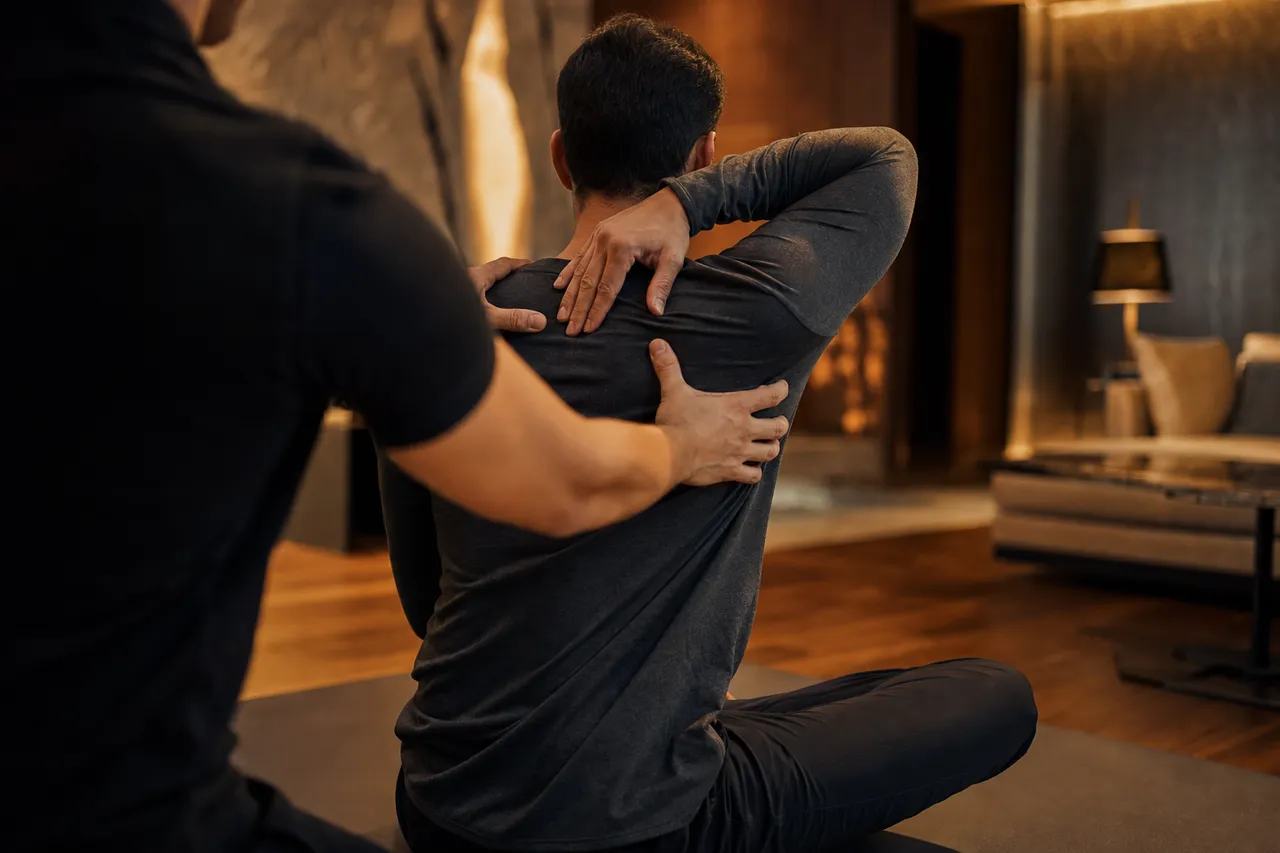
A dry, fully clothed treatment that combines firm rhythmic pressure — using the therapist’s hands, thumbs, forearms and sometimes feet — with a sequence of slow, supported stretches. No oil is used. You wear loose, comfortable clothing throughout, and the therapist moves you through positions rather than asking you to move yourself.
The technique has its roots in a much older tradition of Thai bodywork, and it shows: the movements follow lines through the body — down the legs, along the back, across the shoulders — rather than working one isolated muscle at a time. It can feel closer to a guided yoga session than to a typical hotel-spa massage, and that is by design.
What actually happens in a session
A session typically moves through the body in a fairly predictable order, though a good therapist will always adjust based on where you are holding tension.
Feet and legs first
Most sessions begin at the feet and work up the legs, using palm and thumb pressure along the muscle lines. This is often where travellers feel the first release — feet and calves swell on long flights, and firm, rhythmic pressure gets circulation moving again.
Hips and lower back
Hip openers and gentle rotations follow, often assisted — the therapist supports your leg and guides it through a range of motion your own hip flexors have lost after hours in a seat. This is usually the part that surprises people most; it does not feel like anything on offer at a Western spa.
Back, shoulders and neck
Firm palm and thumb work along the spine and across the shoulders addresses the tightness that builds from hunching over a laptop or a conference table. Pressure is adjusted to what you can comfortably take — say so if anything feels too much.
Final stretches
The session usually closes with a series of supported full-body stretches, sometimes with the therapist using their own bodyweight to deepen a position gently. You leave noticeably looser through the hips, back and shoulders than when you arrived.
It's the only massage that's ever actually done something about my hips after a long flight — not just my shoulders.
Why it suits the stiffness a flight leaves behind
Sitting for ten or twelve hours shortens the hip flexors, compresses the lower back, and stiffens the legs in a way that a purely oil-based massage does not fully reach — oil work is excellent for surface tension, but it does not move a joint through its range. Thai massage’s assisted stretching is built specifically to do that, which is why it tends to be the more effective choice for the particular stiffness that comes from travel, rather than general tension from a stressful week.
Pros
- Restores range of movement in hips, back and shoulders
- Firm, thorough pressure without oil or undressing
- Leaves you limber and alert rather than drowsy
- Reaches stiffness that oil-based strokes do not
Cons
- More active and involved than a purely relaxing oil massage
- Firmer pressure than some first-timers expect
- Not the best choice if your main goal is to fall straight asleep
What to wear, and what to expect physically
Loose, breathable clothing is genuinely important — tracksuit bottoms, joggers, or anything with give at the hips and knees works well. Avoid jeans, tight skirts or restrictive fabric, since several of the stretches ask your hips and legs to move through a full range.
- Wear loose, stretchy clothingJoggers or tracksuit bottoms are ideal
- Mention any injuries or areas to avoid before starting
- Speak up if pressure feels too firmIt should always feel manageable, not painful
- Drink water afterwardsHelps with the mild loosened, worked-on feeling that follows
Book it in your hotel room, not just the studio. Outcall Thai massage travels with a portable mat rather than a table, since several of the stretches work better on a firm, low surface — the therapist brings everything needed and typically arrives within 20 to 30 minutes of booking.
Some soreness the next day is possible, similar to how a good stretch session can leave you feeling worked the day after — it is a sign the muscles and joints were genuinely moved through their range, not cause for concern. Most people feel simply looser and more mobile, with the tightness from the flight noticeably eased.
Choosing a session length
Sessions typically run 60, 90 or 120 minutes. A 60-minute session is enough to work through the legs, hips and back and feel a real difference; 90 minutes allows a fuller, more unhurried pass through the whole body, including more time on the shoulders and neck. First-timers often start with 60 or 90 minutes to get a feel for the pace before committing to a longer session.
Common questions
Is Thai massage painful?
It should not be. The pressure is firm and the stretches go through a genuine range of motion, which can feel intense in a tight spot, but a good therapist works within what you can comfortably manage. Always say something if a position or pressure feels like too much.
Do I need to be flexible to enjoy it?
No — the therapist works with whatever range of motion you currently have and gently extends it, rather than expecting a fixed level of flexibility. Stiff, travel-worn bodies are exactly who this treatment is designed for.
What should I wear?
Loose, comfortable clothing that stretches with you — joggers, tracksuit bottoms or similar. Avoid jeans or restrictive fabric, since several stretches move your hips and legs through their full range.
How is this different from a normal massage?
A typical Western massage uses oil and long strokes on bare skin, worked mostly through the soft tissue. Thai massage is dry, fully clothed, and combines firm pressure with assisted stretching that moves your joints through a range of motion — closer to guided yoga than a standard rubdown.
Can I book this as an outcall to my hotel?
Yes. The therapist brings a portable mat and everything needed, and can typically be at your hotel within 20 to 30 minutes of booking via LINE, Telegram or phone.